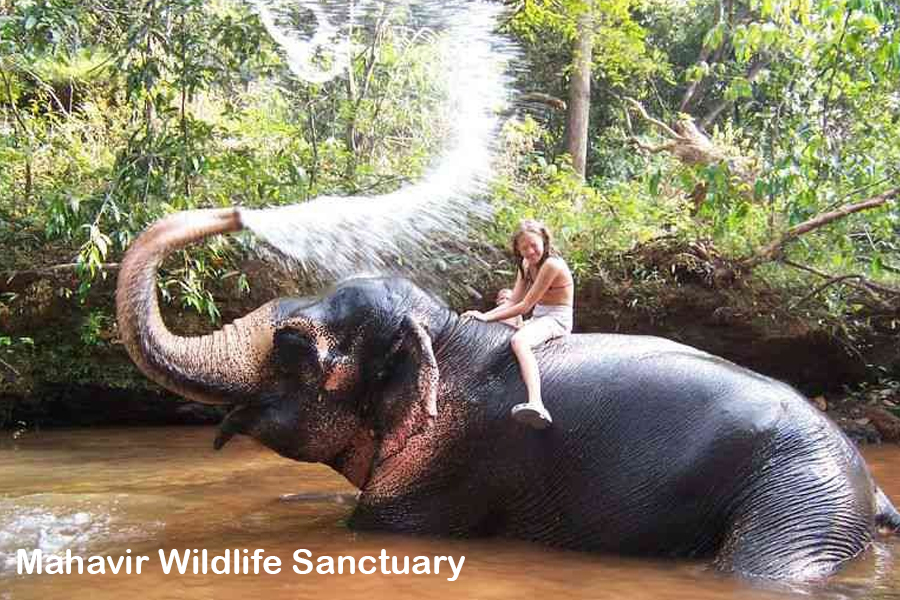
Set amidst the foothills of the Western Ghats and covering an impressive 240 sq. km the Bhagwan Mahavir Wildlife Sanctuary holds the title of the largest wildlife preserve within the state of Goa.
This sanctuary is home to a huge variety of plant, bird and animal life. Nature lovers and hikers enjoy the hiking trails that traverse this huge tract of land. In addition to the large amount of biodiversity that the sanctuary possesses, it is also home to the famous Dudhsagar waterfall, the Devil’s Canyon, the Tambdi Surla temple, the Tambdi falls and a number of other historic and religious sites.
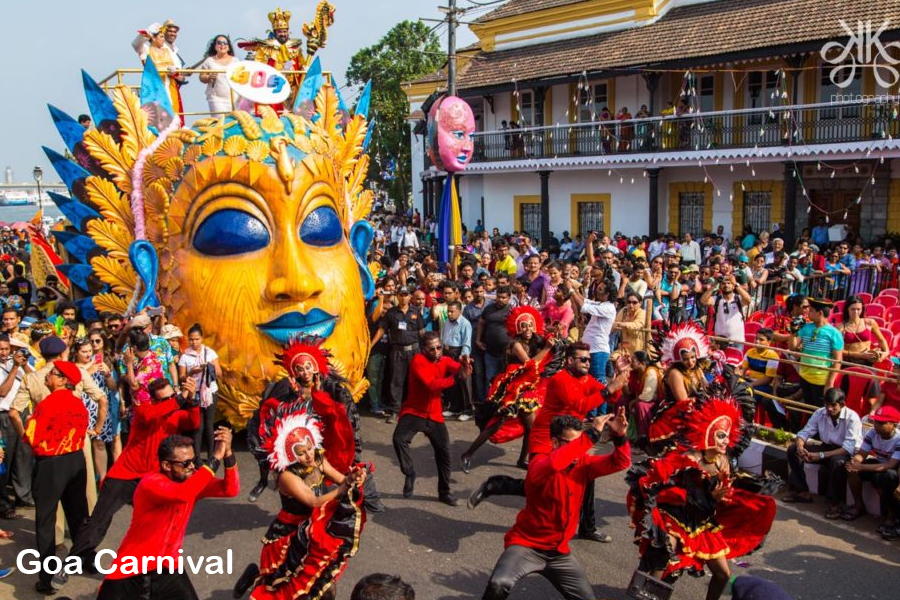
Loud music, lively crowd and a fiesta that will drive you crazy is what the Goa Carnival is all about. Started in 1961 the carnival gained significant amount of recognition and fame due to its fun-filled ambience. The carnival goes on for 3-4 days and brings joy to all of Goa. From singing, dancing, to feasting the carnival is sure to liven up your spirits. The festival is held in February every year.
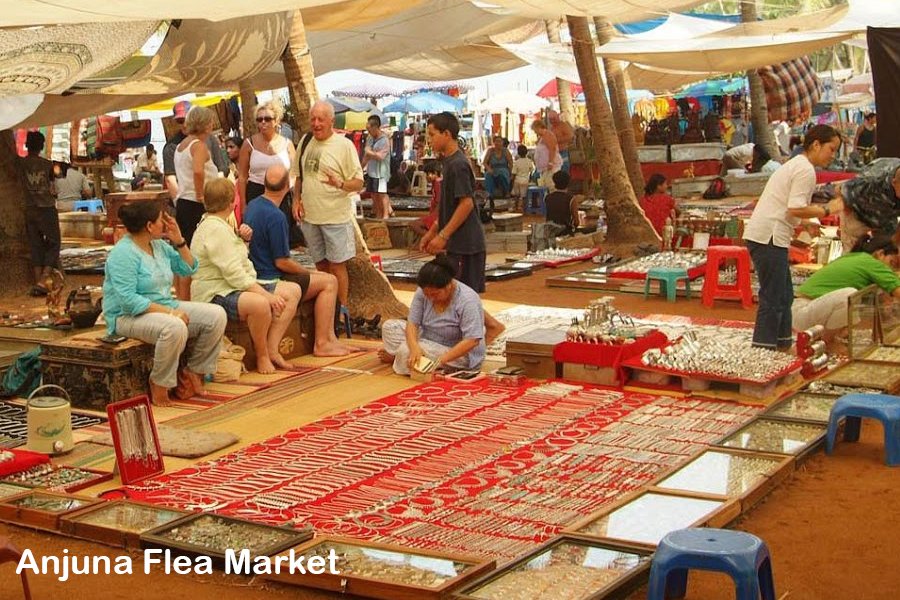
Anjuna Flea Market is the most known of them all. Also, it is one market which is your one stop solution to buy everything and in a flea market rate. Imagine, shopping in Goa is as reasonable and affordable as partying and staying here. You get everything that you need to wear, accessorize, decorate and gift. It is also quite a lively affair because it is surrounded by restaurants, stalls and various other fun activities.
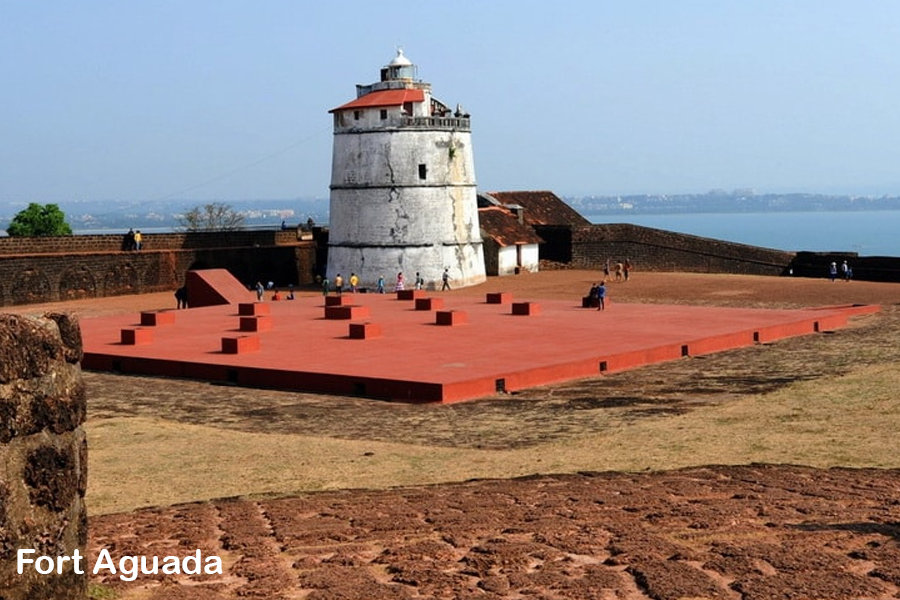
The fort was constructed in 1612 to guard against the Dutch and the Marathas. It was a reference point for the vessels coming from Europe at that time. This old Portuguese fort stands on the beach south of Candolim, at the shore of the Mandovi River. It was initially tasked with defense of shipping and the nearby Bardez sub district. A freshwater spring within the fort provided water supply to the ships that used to stop by. This is how the fort got its name: Aguada, meaning Water. Crews of passing ships would often visit to replenish their fresh water stores. On the fort stands a four-storey Portuguese lighthouse, erected in 1864 and the oldest of its kind in Asia. Built in 1612, it was once the grandstand of 79 cannons. It has the capacity of storing 2,376,000 gallons of water, one of the biggest freshwater storages of the time in whole of Asia. This fort is divided in two segments: the upper part acted as fort and watering station, while the lower part served as a safe berth for Portuguese ships. Whereas the upper part has a moat, underground water storage chamber, gunpowder room, light house and bastions, it also has a secret escape passage to use during time of war and emergency. The lighthouse at initial stage is used to emit light once in 7 minutes. In 1834 it was changed to emit light creating eclipse every 30 seconds, however it was abandoned in 1976.
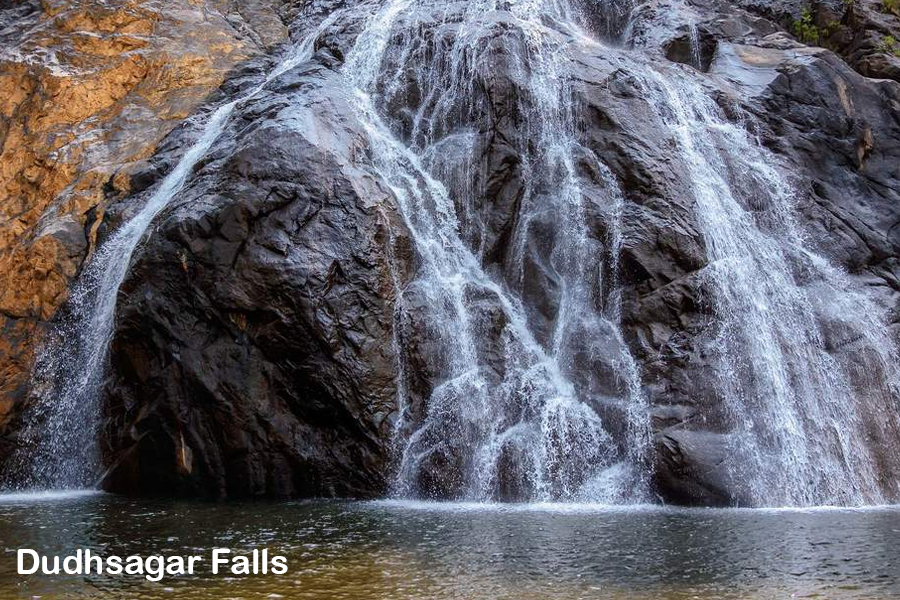
Dudhsagar Falls (literally Sea of Milk ) is a four-tiered waterfall located on the Mandovi River in the border of the Indian state of Goa and Karnataka. It is 60 km from Panaji by road and is located on the Madgaon-Belgaum rail route about 46 km east of Madgaon and 80 km south of Belgaum. Dudhsagar Falls is amongst India's tallest waterfalls with a height of 310 m (1017 feet) and an average width of 30 metres (100 feet). The falls is located in the Bhagwan Mahaveer Sanctuary and Mollem National Park among the Western Ghats. The waterfall forms the border between Karnataka and Goa states. The area is surrounded by a deciduous forests with a rich biodiversity. The falls are not particularly spectacular during the dry season but during the monsoon season however, the falls are fed by rains and form a huge force of water. The nearest rail station accessible by road to the falls is Castle Rock station. Visitors could get in a train from here and disembark at the Dudhsagar stop. It is to be noted that the Dudhsagar rail stop is not a station where passengers can expect a platform. Passengers and visitors have to climb down the steep ladder of the rail compartment in a short 1-2 minute unscheduled stop. From this rail stop, visitors have to walk about a kilometer on the tracks to arrive at the falls. While the walk itself is something unexpected for a popular tourist destination, there is a 200 m train tunnel that is totally dark which makes the walk a bit tougher. Recently Indian Railways has banned people from boarding/deboarding passengers at Dudhsagar railway. There is no availability of fresh drinking water nor clean rest room facilities anywhere in the vicinity of the falls including at the rail stop. There is absolutely no access to power or cellular signal at this location just as there is no access to road transportation.
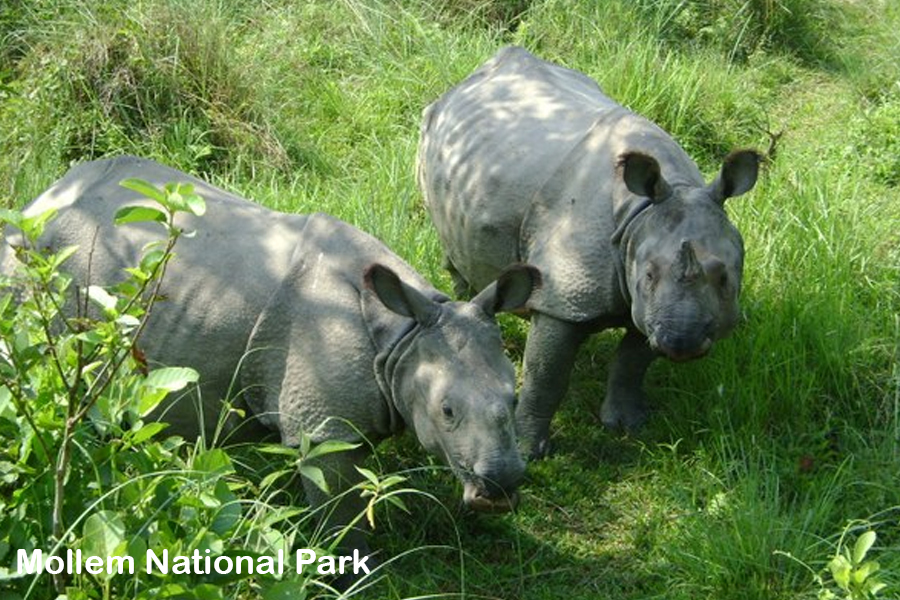
Bhagwan Mahaveer Sanctuary and Mollem National Park is a 240 square kilometres (93 sq mi) protected area located in the Western Ghats of South India, in Sanguem taluk, Goa along the eastern border with Karnataka. The area is situated near the town of Molem, 57 kilometres (35 mi) east of Panaji, the state capital of Goa. National Highway 4A divides it into two parts and the Mormugao - Londa railway line passes through the area. It is located between 15°15"30' to 15°29"30' N and 74°10"15' to 74°20"15' E. It contains several important temples dating to the Kadamba Dynasty, and Dudhsagar Falls. The parkland is also home to a community of nomadic buffalo herders known as the Dhangar. This sanctuary contains pristine vegetation classified as West Coast tropical evergreen forests, West Coast semi-evergreen forests and moist deciduous forests. The evergreen forests are mainly seen at higher altitudes and along the river banks. The predominant species are Terminalia, Lagerstroemia, Xylia and Dalbergia. The forest canopy is almost closed and the availability of grass is very limited. There are several perennial water sources in the sanctuary and the availability of water is not a limiting factor for wildlife.
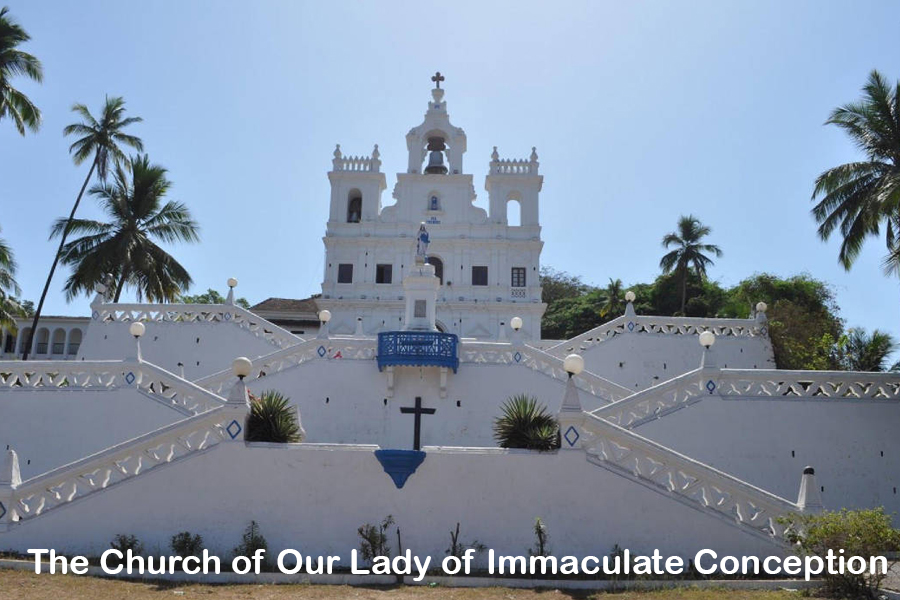
The Our Lady of the Immaculate Conception Church (Nossa Senhora da Immaculada Conceicao) is located in Panjim, Goa, India. The Church conducts mass every day in English, Konkani, and Portuguese. The colonial Portuguese Baroque style church was first built in 1541 as a chapel on a hill side overlooking the city of Panjim. It was eventually replaced by a larger church in the 1600s as part of Portuguese Goa's religious expansion. This church houses the ancient bell that was removed from the Augustinian ruins of the Church of Our Lady of Grace (Nossa Senhora da Graça) in the once famed city of Old Goa. This bell is considered to be the second largest of its kind in Goa, surpassed only by the Golden Bell which resides in the Sé Cathedral in Old Goa. The church is located in Panjim and sits atop a hill facing the square below. The city's municipal garden (Garcia da orta) lies to its southeast and can be seen from atop the hill. The site was once the location of a colonial port landing where ships sailing from Lisbon made first call, and where sailors disembarked before they proceeding further inland to Ela (now Old Goa) - the capital of Goa until the 19th century. A laterite stone walkway with ziz-zag stairs ascend the church while lines of thin and tall palm trees form part of the scene.
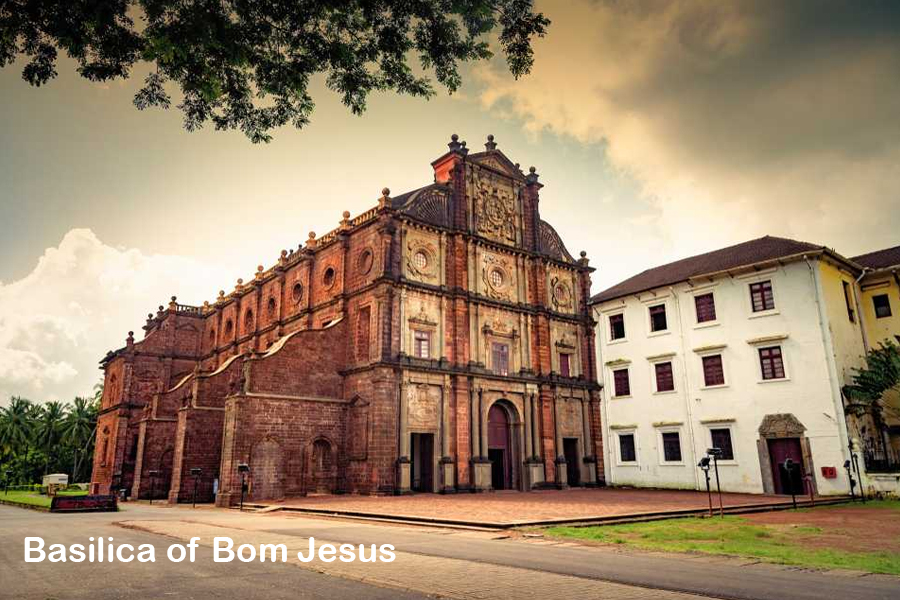
The Basilica of Bom Jesus or Borea Jezuchi Bajilika (Portuguese: Basílica do Bom Jesus) is located in Goa, India, and is a UNESCO World Heritage Site. The basilica holds the mortal remains of St. Francis Xavier. The church is located in Old Goa, which was the capital of Goa in the early days of Portuguese rules. 'Bom Jesus' (literally, 'Good (or Holy) Jesus') is the name used for the Ecce Homo in the countries of Portuguese colonization. The Jesuit church is India’s first minor basilica, and is considered to be one of the best examples of baroque architecture in India. The Basilica of Bom Jesus is more than 408 years old and is open to the public every day. The body of St. Francis Xavier is in a well-decorated casket, which can be seen in the photographs below. Solemn exhibitions of the 'body' are held every ten years. Some photos taken inside the church are attached for better understanding of the art work of that time. These art works are called "murals".
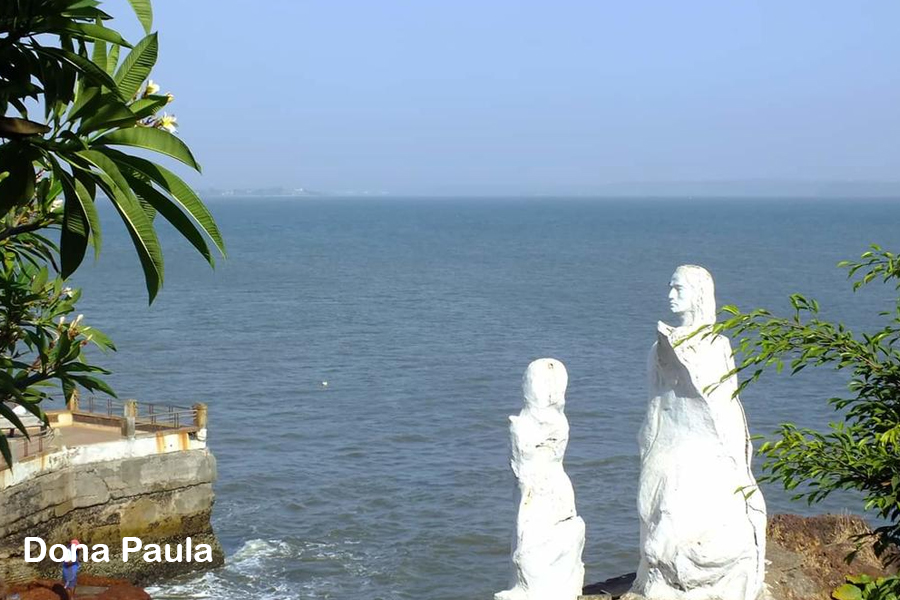
Dona Paula is a former village, and tourist destination, in the suburbs of Panaji, Goa, India. It is today home to the National Institute of Oceanography, and just alongside it lie the Goa University and the International Centre Goa. It is also home to a number of hotels, small and large, and the luxury Cidade de Goa is situated in the area. The place is named after Paula Amaral Antonio de Souto Maior, a historical figure in Portuguese India. She was the daughter of the Portuguese Viceroy of Jaffnapatnam, in Sri Lanka. She and her family arrived in Goa in 1644 and she married a Fidalgo from Spain in 1656. Her husband was Dom Antonio Souto Maior. They were an extremely affluent family, and the entire property from the present day Cabo Raj Nivas all the way to Caranzalem belonged to the Souto Maior's. She died on December 21, 1682.
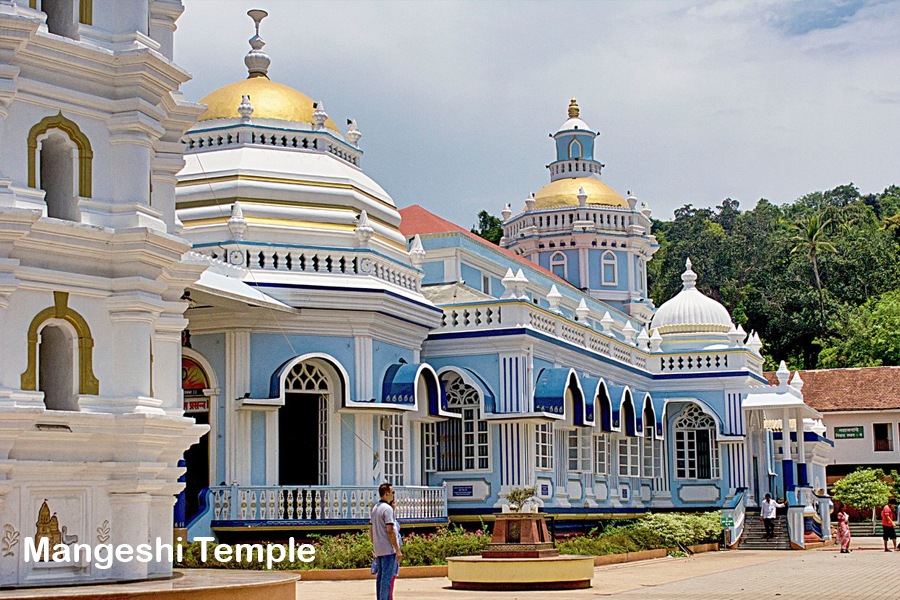
Shri Mangesh temple (Devanagari) is located at Mangeshi Village in Priol, Ponda taluk, Goa. It is at a distance of 1 km from Mardol close to Nagueshi, 21 km from Panaji the capital of Goa, and 26 km from Margao. This temple is one of the largest and most frequently visited temples in Goa. In 2011, the temple along with others in the area instituted a dress code on visitors of the temple. Like most temples in Goa, Mangueshi Temple has a large number of pujas being performed daily. Every morning, Shodshopchar pujas, namely Abhisheka, Laghurudra and Maharudra, are performed. This is followed by Maha-Aarti at noon and Panchopchar pooja at night.
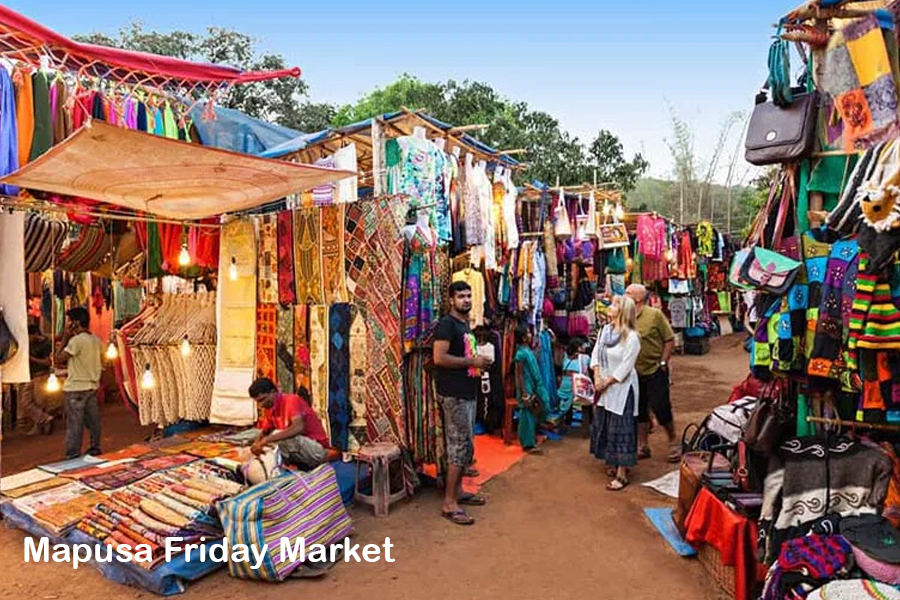
Mapusa Friday Market is a traditional, regional weekly market in Mapusa, North Goa and a major tourist attraction. It is located within and around the Mapusa Municipal market area. On each Friday, many vendors from the sub-district of Bardez and the neighbouring sub-district of Tiswadi, besides other areas, descend on the stalls selling a variety of local produce brought in by farmers and small entrepreneurs from all over Goa which are sold directly to the consumer. The market winds up by dusk. This market reflects the essence of Goa and it is a riot of colour and noise. Goan vendors dressed in their colourful clothes come in from the surrounding villages to sell their locally grown or manufactured wares, including spices of all kinds. Fresh fruits, mostly organically grown, is sold in abundance. The market is well known for its jewellery, pottery, spice, and carpet shops. Many of the stalls in the bazaar are grouped by type of goods, with special areas for straw hats, Goan home-made chouriço and the like. Strings of Goan chouriço, spiced and marinated pork sausages, are sold here. Seedless tamarind, or amot as it is known locally, is also traded in great demand.
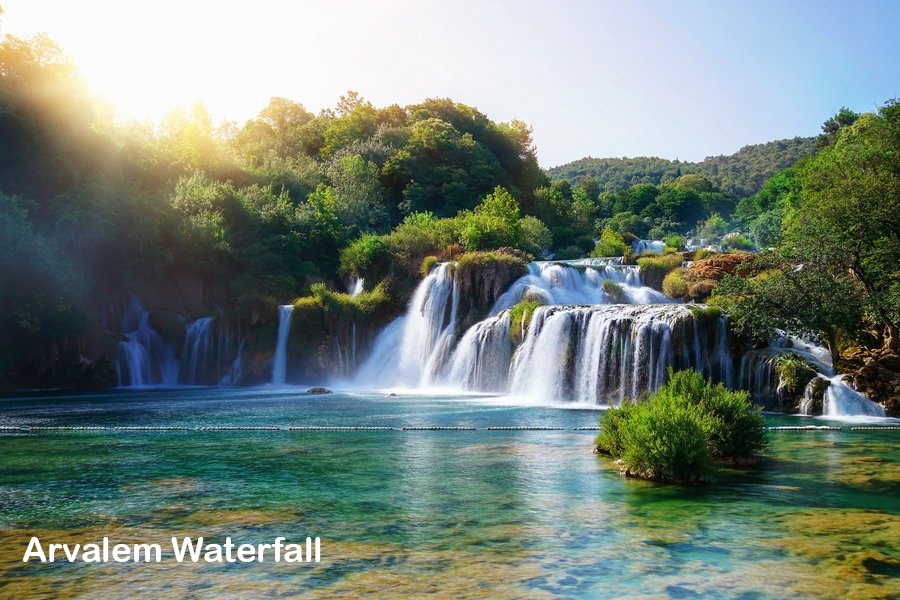
Just passing the town of Sanquelim, there is a detour road leading towards Arvalem Caves. These caves from the 6th century, are quite small, with no articulate sculptures or paintings. The origin of these caves is uncertain, some believing them to be of Buddhist origin, although the presence of lingas does not justify this statement claiming them to be of Brahmin origin. They are also claimed to be known as the Pandava caves, signifying the reign of Pandavas here during their 12 year exile as described in the Mahabharata. The shafts of the four carved lingas inside the cave resemble to those found at the famous Elephanta and Ellora caves. The Arvalem caves are very much patterned in the Buddhist cave style, rock cut into laterite stone, with the sanctuary at the northern end and the vihara at the southern end. The claim of the caves being of Buddhist origin is a justified statement, mainly due to the discovery of a huge Buddha statue nearby and a 4th century Buddha head found in the Mhamai Kamat house now installed in the Goa State museum.